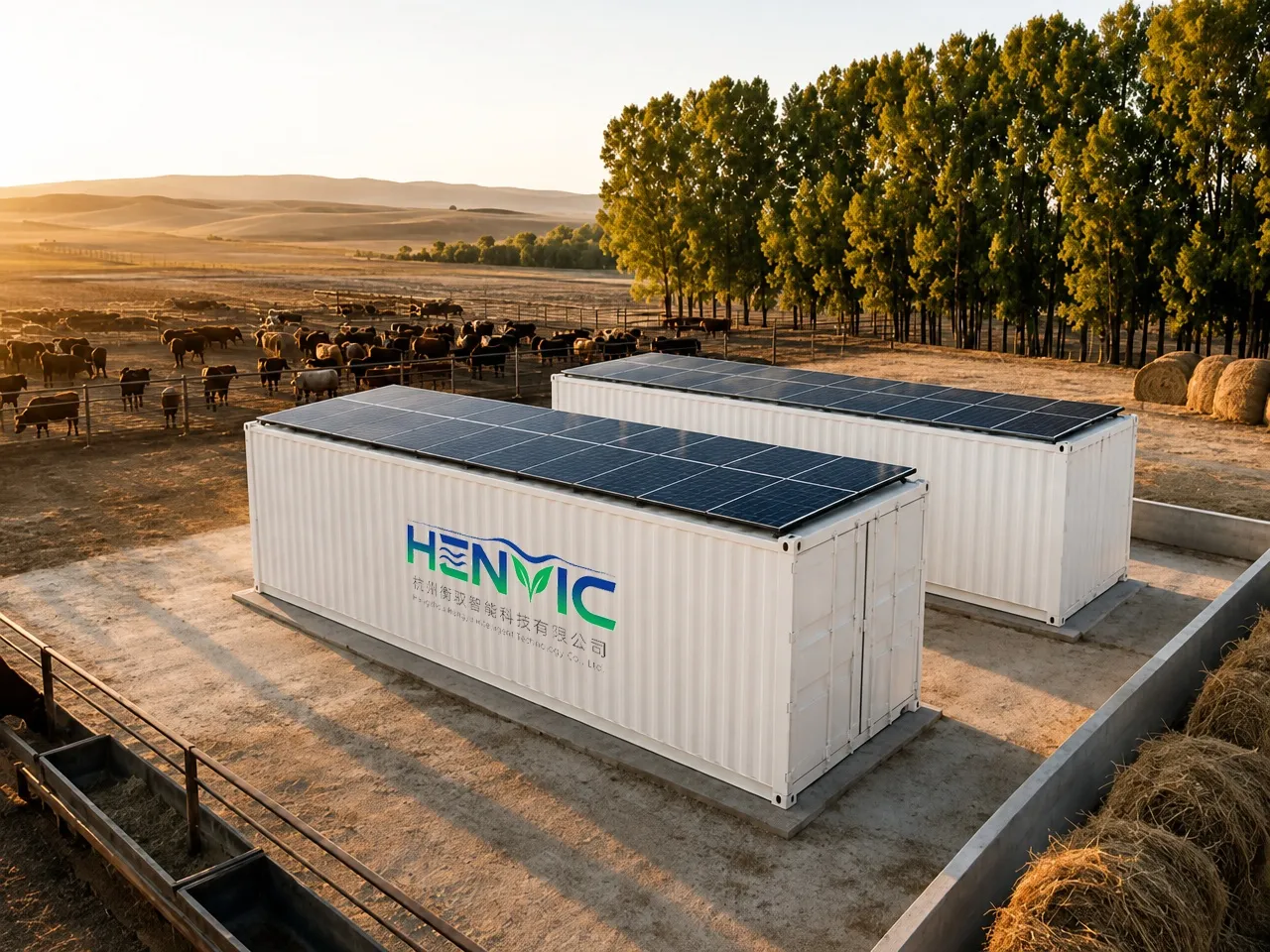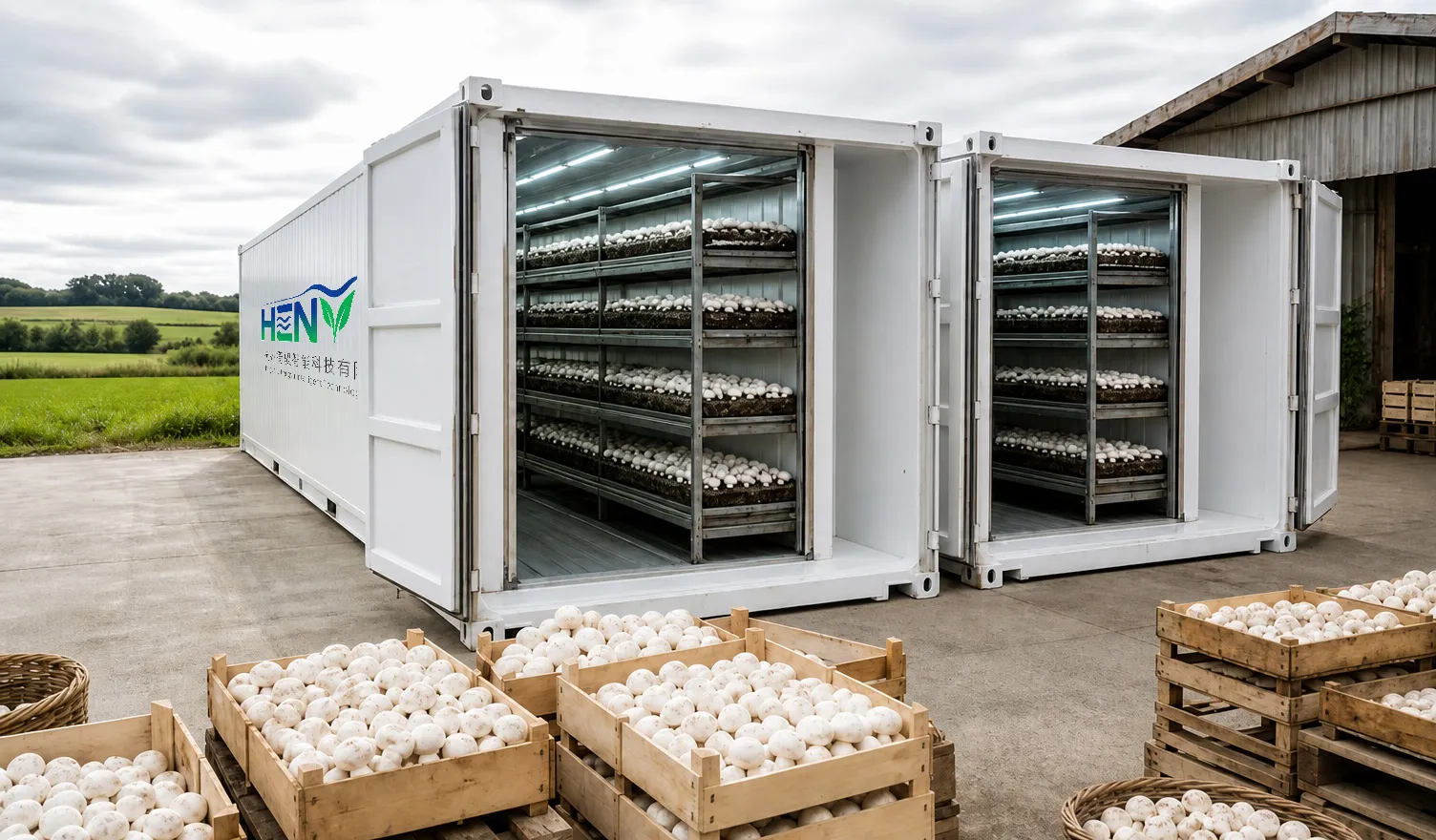
A single container farm demonstrates what is possible. Twenty of them constitute a business, and the problems emerging between the first unit and the twentieth are rarely about the growing system. They are about variance: the same design, built and commissioned by different crews, performs differently, and yield spread across a fleet can exceed the yield difference between good and poor recipes. Managing that spread is the real content of scaling container farming, and it is a commissioning and standardisation problem before it is an agronomy problem.
The single container hides variance because it has no comparators. On a one-unit site, a temperature offset of 1.5 °C, a fan running slightly slow, or a sensor mounted two metres from where the design intended is simply how that farm behaves. Nothing in the data reveals it as a deviation. At twenty units the same deviations produce a visible distribution, and an operator managing to a single recipe cannot control the fleet as though it were one farm. The first task in scaling is to build the instrumentation and process that make variance visible before it accumulates.
Commissioning is the mechanism that converts a design into a reproducible facility. A commissioning protocol should be unit-by-unit and documented, because undocumented commissioning relies on the people performing it rather than on the facility. The components are the mechanical systems — chilled water, air handling, drainage, ventilation — the lighting, the nutrient delivery system, and the controls. Each has measurements confirming the as-built system meets design intent.
For airflow, the measurement of record is velocity and temperature at a defined grid of canopy positions, taken at design canopy density. Empty-rack measurements are nearly meaningless; the pattern that matters exists when the crop is present. For lighting, the record is photon flux density at the canopy plane at design mounting distance, fixture driven at specified operating current, sampled across the tier rather than at one point. For nutrients, the record is flow rate at each channel, dissolved oxygen at the return, and solution temperature at reservoir and return. For controls, the record is the set point, sensor location, calibration certificate, and controller logic as configured.
The value of a documentation requirement is less that it produces a report than that it forces the commissioning crew to confront the measurements. A loose sensor, an underspeed fan, an undersized coil — none are discovered by reading design drawings, and all are discovered by taking the measurement and comparing it with the specification.
Sensor placement is the most common source of fleet-wide control error. A temperature sensor on a container wall does not measure canopy temperature. It measures air near the wall, which may be warmer or cooler than the canopy depending on layout. If the control system is trying to hold canopy VPD and is fed wall measurements, it holds the wrong variable. At scale this produces a systematic bias across all units built to the same pattern, and no amount of recalibration fixes a sensor in the wrong place.
The remedy is a placement standard: sensor height, distance from the rack face, position relative to fixtures, and separation from the air return. The standard should be verified at commissioning with a portable reference instrument and logged per unit. Making sensor location a drawing-level requirement rather than a field-level decision is among the cheapest standardisation measures available.
Recipe portability is a commissioning problem dressed as an agronomy problem. A recipe developed on one container often underperforms when applied to another, and the cause is rarely the recipe. It is usually an environmental difference the recipe presumes to control but does not: a slightly different VPD, canopy temperature, CO₂ level, or solution temperature. If units were built to the same specification and commissioned to the same measurements, the recipe transfers. If they were not, it must be re-tuned per unit, which defeats the purpose of scale entirely.
This is why the ordering of scale-up matters: build measurement and commissioning discipline at two or three units, then extend. A fleet commissioned to a documented standard can be managed as one process with per-unit verification. A fleet assembled unit by unit without that standard becomes a collection of individual farms each requiring a different recipe, and no central management compensates for that.
The economics of scale are dominated by utilisation, not unit cost. Installed cost per square metre of growing area falls as more units are built to the same design — tooling, fixtures, and controls amortise and procurement consolidates. But operating cost per kilogram of product depends far more on how completely each unit is used: how much of the available canopy area is productive in a given week, how consistently each unit hits its cycle time, and how much product is lost to crop failures and missed harvest windows. A fleet of twenty units each at 80 % productivity and 90 % reliability is more valuable than forty units at 50 % and 70 %, and the difference comes from standardisation and reliability engineering, not capital cost.
This argues for treating reliability as an operational discipline with its own metrics: mean time between failures of critical subsystems, the fraction of production cycles completed within the target window, and the loss rate from quality rejects. These determine whether scale produces an advantage or merely multiplies existing variance.
Standardisation extends to spares and maintenance strategy. A fleet built from a single design can be maintained with one spares inventory and one maintenance procedure. A fleet assembled from a mixture of slightly different units cannot. This argues for resisting the temptation to customise each new unit — the second and third are the most dangerous, because that temptation is strongest before the cost of non-standardisation is visible. The value of a fleet is precisely that it is many of one thing, and every deviation weakens that value.
What belongs in the fleet standard. A fleet specification should define, at minimum: the environmental set point and control logic, including sensor locations and calibration intervals; the lighting configuration, drive current, mounting geometry, and measurement plane; nutrient delivery flow rates, dissolved oxygen target, and solution turnover schedule; the ventilation and CO₂ strategy with measurement points; the commissioning protocol and its measured acceptance criteria; and maintenance intervals for the components whose degradation most affects yield. These are not agronomic parameters; they are the engineering conditions under which the agronomic parameters hold. A fleet built to a documented standard can be managed from a single control room. A fleet without one can only be managed farm by farm, which is the opposite of what scale is for.