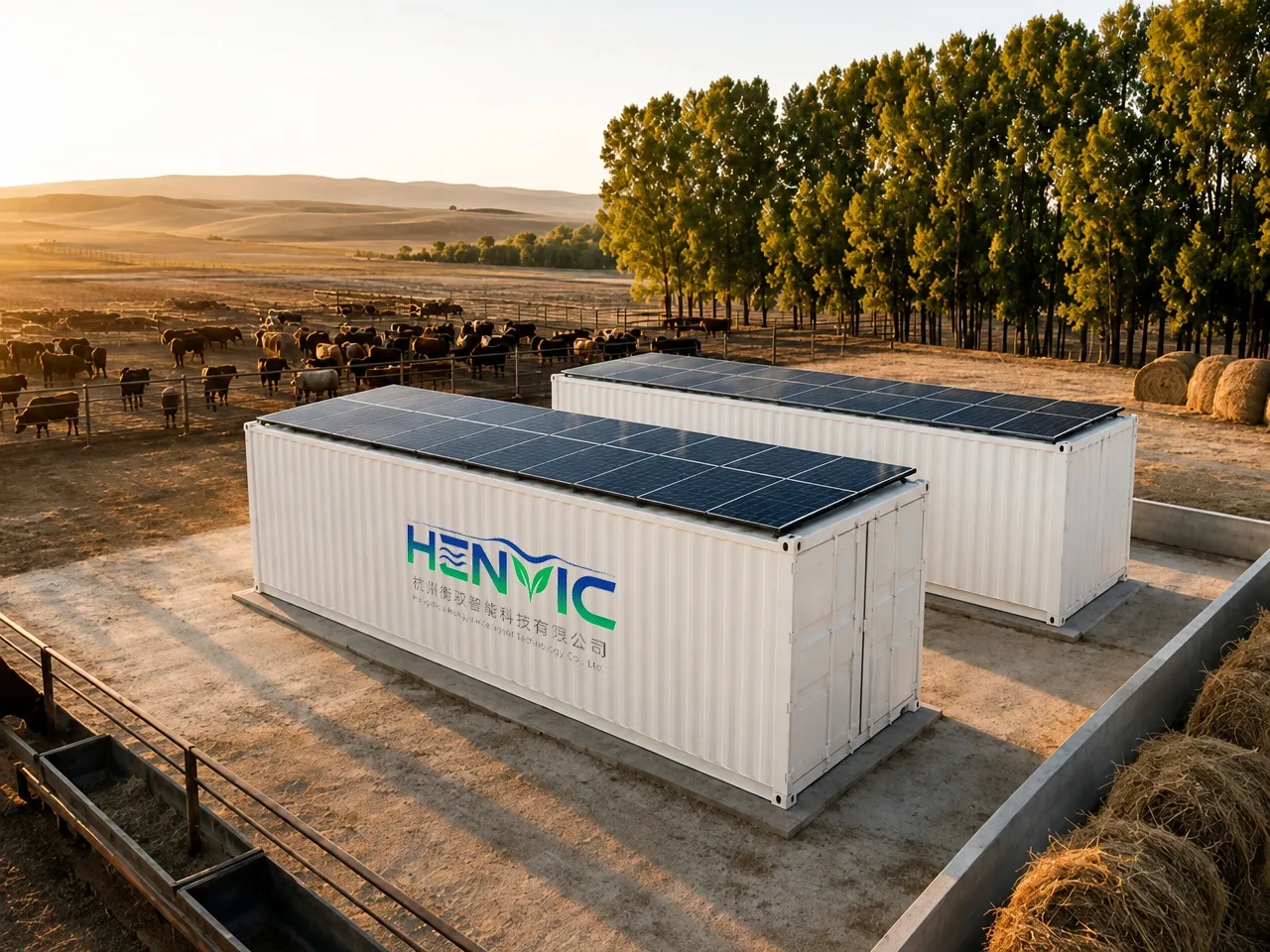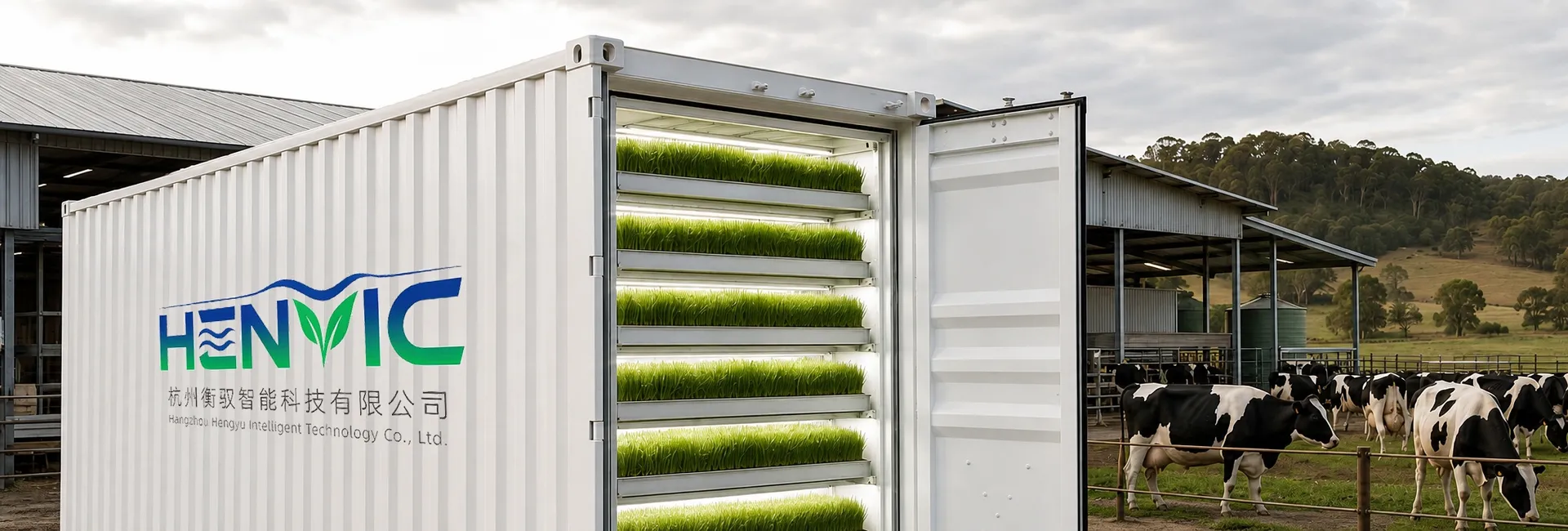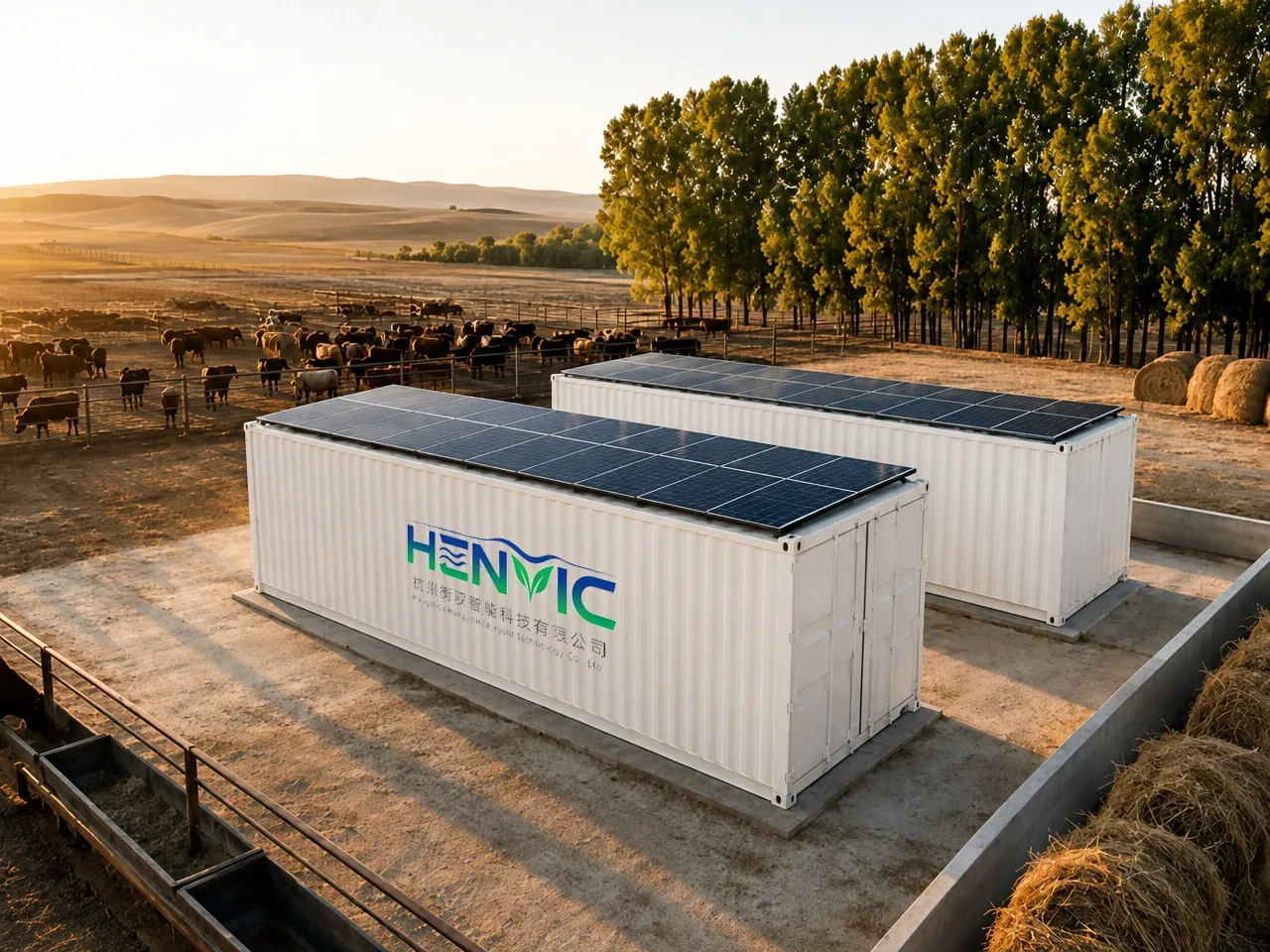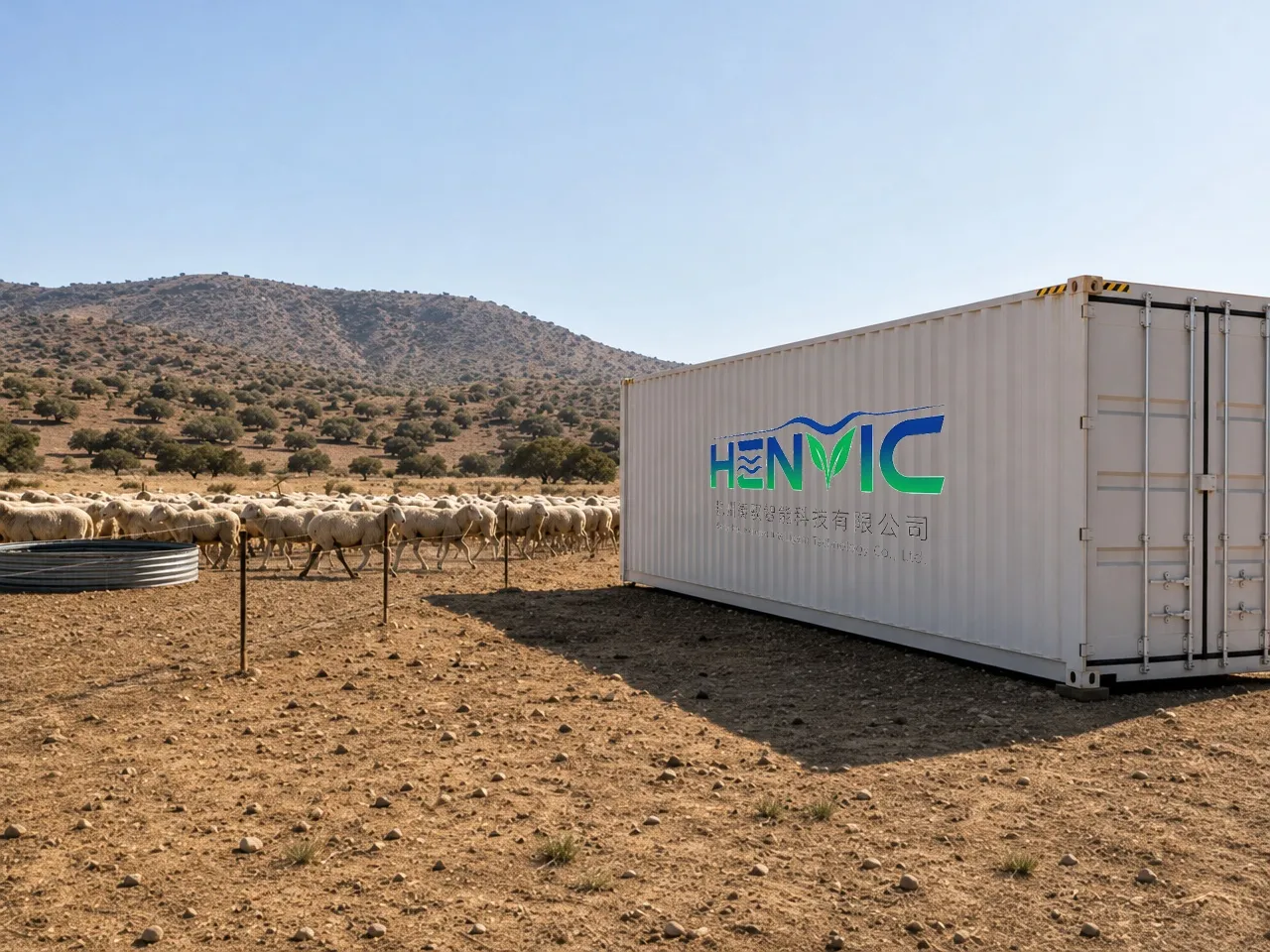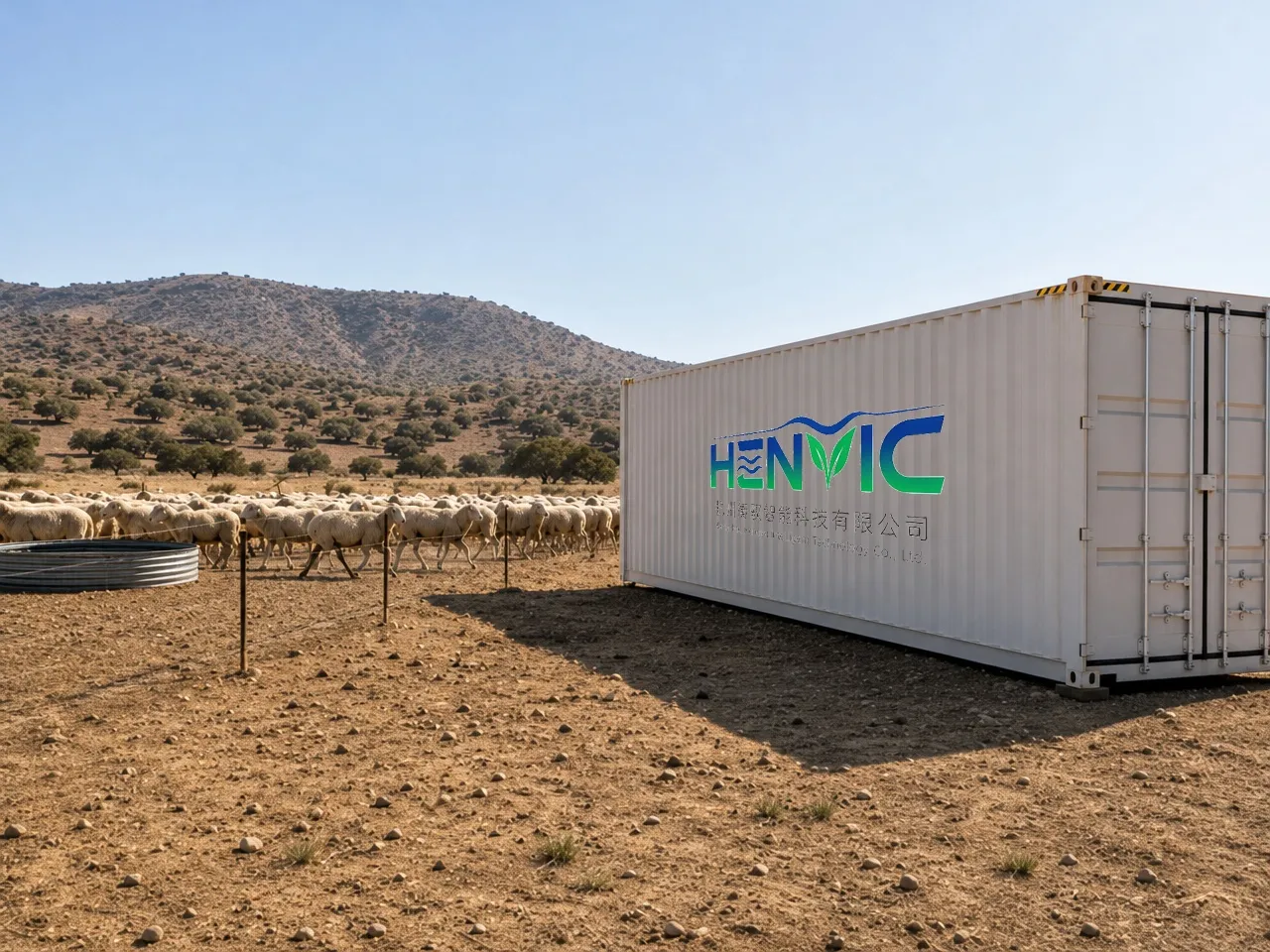
The "last mile" of food is rarely a question of distance. It is a question of fragility: the final segment of the supply chain, where refrigeration fails, delivery frequency collapses, and the cost per edible calorie spikes. A lettuce head that travels two hours from a peri-urban greenhouse is cheap; the same lettuce airlifted to a research station, an island outpost, or a desert construction camp can cost ten or twenty times more — and may arrive wilted regardless. Container farms answer this problem not by improving the journey but by abolishing it. By packing a controlled growing environment into a standard forty-foot steel box, they relocate production to the point of consumption, converting a logistics problem into an engineering one.
The idea sounds like a novelty until you examine the three environments where it matters most: deserts, polar regions, and islands. Each imposes a distinct constraint — heat and aridity, cold and darkness, isolation and salt — yet all three share the same underlying logic. Fresh produce is the hardest category to supply reliably, the most perishable, and the most psychologically important for the people living there. Container farms target exactly that gap.
What the last mile really costs
In ordinary supply chains, fresh vegetables move through cold chains with predictable spoilage margins. In extreme environments, three things break down at once. First, the cold chain itself: high ambient temperatures in deserts, extreme cold and wind in polar regions, and salt-laden humidity on islands all attack refrigeration equipment that was designed for temperate conditions. Second, supply frequency: shipments may arrive weekly, monthly, or seasonally, forcing reliance on preserved or frozen food. Third, and least discussed, is variety. Long-shelf-life produce tends toward root vegetables and canned goods; leafy greens and fresh herbs — the foods most associated with dietary quality and morale — are precisely the ones that travel worst.
Container farms attack all three by placing production within meters of the consumer. The crop is harvested and eaten within hours, so the cold chain disappears. Supply frequency becomes irrelevant because the "shipment" is harvested daily. Variety becomes a programming choice rather than a logistics constraint.
Deserts: fighting heat with enclosure
Desert environments offer abundant sunlight and land, but punishing heat, low humidity, and scarce fresh water. Here the container's sealed envelope is an advantage rather than a limitation. Inside a container farm, the climate is decoupled from the desert: temperature, humidity, and light are all engineered, so the external 45 °C afternoon becomes irrelevant.
The governing constraint in deserts is water and cooling energy, not light. A well-designed recirculating hydroponic or aeroponic system can cut water use by 90 percent or more compared with field agriculture, because transpiration is captured and returned rather than lost to the soil. Cooling, however, is the dominant electrical load — and it is here that the desert's main resource, solar irradiance, can be turned to account. Many Gulf-region projects pair container or vertical farms with on-site photovoltaic arrays, offsetting daytime cooling demand against peak generation.
The Gulf states have become the most visible testing ground. The Emirates has invested heavily in controlled-environment agriculture as a food-security strategy, and commercial vertical farms — some publicly reported as among the largest in the world — now supply supermarkets in Dubai and Abu Dhabi. Saudi Arabia's NEOM and related initiatives have made protected agriculture a centerpiece of their food-import-reduction plans. These are large-scale facilities rather than single containers, but the underlying engineering is the same, and the container format serves a complementary role: it can be dropped into remote construction camps, mining sites, and military bases where no permanent farm is justified.
Polar regions: growing food where the sun disappears
If deserts are a test of cooling, polar regions are a test of everything else. Research stations in Antarctica and the high Arctic face months of darkness, ambient temperatures below -40 °C, extreme wind, and supply windows that may open only once or twice a year. Fresh produce arrives by ship or aircraft, is consumed quickly, and is absent for much of the year.
Here the container farm is not a commercial proposition but a life-support and morale technology. Several national Antarctic programs have experimented with controlled-environment growing modules, and the most studied of these is the EDEN ISS project, a joint European effort led by the German Aerospace Center, which tested a container-based greenhouse at the Neumayer III station on the Antarctic coast beginning in 2018. The project grew leafy greens, herbs, and small vegetables under LED lighting in a sealed module, explicitly examining not only yields but also the psychology of having fresh food in an isolated setting.
The engineering challenges are distinctive. Energy must come from the station's own supply — typically diesel generators or, increasingly, wind and solar where available — so efficiency is paramount. Insulation must prevent both heat loss and internal condensation. Air must be recycled, and humidity controlled, because the same sealed environment that protects plants also traps moisture. Logistics matter as much as during the station's construction: a container module must be deliverable by icebreaker or cargo aircraft, and must function after months of unattended transport.
The payoff is measured less in economics than in human factors. Fresh greens have been repeatedly identified as a major morale factor in isolated crews, and the technique is consciously framed as a precursor to long-duration spaceflight, where resupply distances dwarf anything on Earth.
Islands: the economics of impossible logistics
Islands — particularly small, remote ones — present the sharpest version of the last-mile problem. A Pacific or Caribbean island may receive fresh produce by ship once a week or less, with transit times that strip quality and add cost. Local agriculture is often limited by soil quality, freshwater availability, and land competition from tourism or housing. Salt spray and high humidity corrode equipment.
Container farms fit islands unusually well for a simple reason: the island's core problem is not lack of sunlight, but lack of reliable, high-quality, affordable supply. A container placed near a resort, a hospital, a school, or a community center can produce greens and herbs daily, eliminating both the freight cost and the spoilage loss. Water can be drawn from desalinated or rainwater sources, and cooling loads are moderate compared with deserts.
The island case also exposes the economics most clearly. Imported produce on remote islands carries a freight premium that can be several times the farm-gate price, plus spoilage losses that may reach a third of shipped volume. Against that baseline, the container farm's higher capital and operating costs become far more competitive than they would be on the mainland. The technology does not need to beat conventional farming; it needs to beat airfreight and spoilage, which is a much lower bar.
The shared technology stack
Across all three environments, the same engineering toolkit applies. Sealed and insulated envelopes decouple internal climate from external extremes. LED lighting with tailored spectra replaces or supplements sunlight, allowing production in darkness. Recirculating hydroponics or aeroponics minimizes water consumption and eliminates soil. Reverse osmosis or atmospheric water generation supplies irrigation where freshwater is scarce. Solar, wind, or existing station power provides energy, with battery or thermal storage smoothing demand. Remote monitoring and automated control reduce the need for on-site specialists.
The most important shared feature is modularity. A container is a standard shipping unit; it can be moved by truck, ship, or aircraft; it can be stacked; it can be added incrementally as demand grows. That standardization is what turns controlled-environment agriculture from a bespoke construction project into a deployable product — and deployability is precisely what the last mile demands.
Where the economics actually work
Container farms are not universally cheap. Their capital and energy costs are high, and they excel at a narrow but valuable crop range: leafy greens, herbs, microgreens, and some fruiting crops. In temperate, well-connected markets, they struggle to compete with field agriculture on cost.
Their advantage appears where the alternative is severe. Remote islands, polar stations, desert camps, disaster zones, military installations, and dense urban areas with expensive fresh-produce logistics all present the same structure: high baseline cost of imported fresh food, low reliability, and a premium on quality and immediacy. In these settings, the container farm's value is not measured in cost per kilogram of lettuce grown, but in cost avoided — freight, spoilage, waste, and the health and morale consequences of poor nutrition.
What it cannot do
It would be dishonest to present container farms as a general solution to food security. They cannot economically replace staple crop production — grains, pulses, and tubers are grown at scales and costs that controlled environments cannot match. They depend on reliable energy, technical maintenance, and spare parts, all of which are themselves hard to supply in remote locations. Their crop range is limited by plant height, root volume, and light requirements. And they remain capital-intensive, which means their deployment usually requires institutional or public backing rather than purely market logic.
They are best understood as a targeted instrument: a way to supply the most perishable, most valued, and least shippable categories of food to places where conventional supply chains fail or cost too much.
Outlook
The trajectory is toward cheaper sensors, more efficient LEDs, better energy integration, and greater automation — all of which lower the operating cost that currently limits deployment. As energy systems in remote regions shift toward renewables, and as standard container interfaces mature, the cost of placing a functioning farm in a hostile location will continue to fall.
The deeper shift is conceptual. The last mile of food has traditionally been treated as a transport problem, to be solved with ships, planes, and cold storage. Container farms suggest a different framing: that in some environments, the most efficient way to move food is not to move it at all. For a desert camp, a polar station, or a remote island, the question is no longer whether fresh food can be delivered, but whether it can be grown — and increasingly, the answer is a forty-foot box.