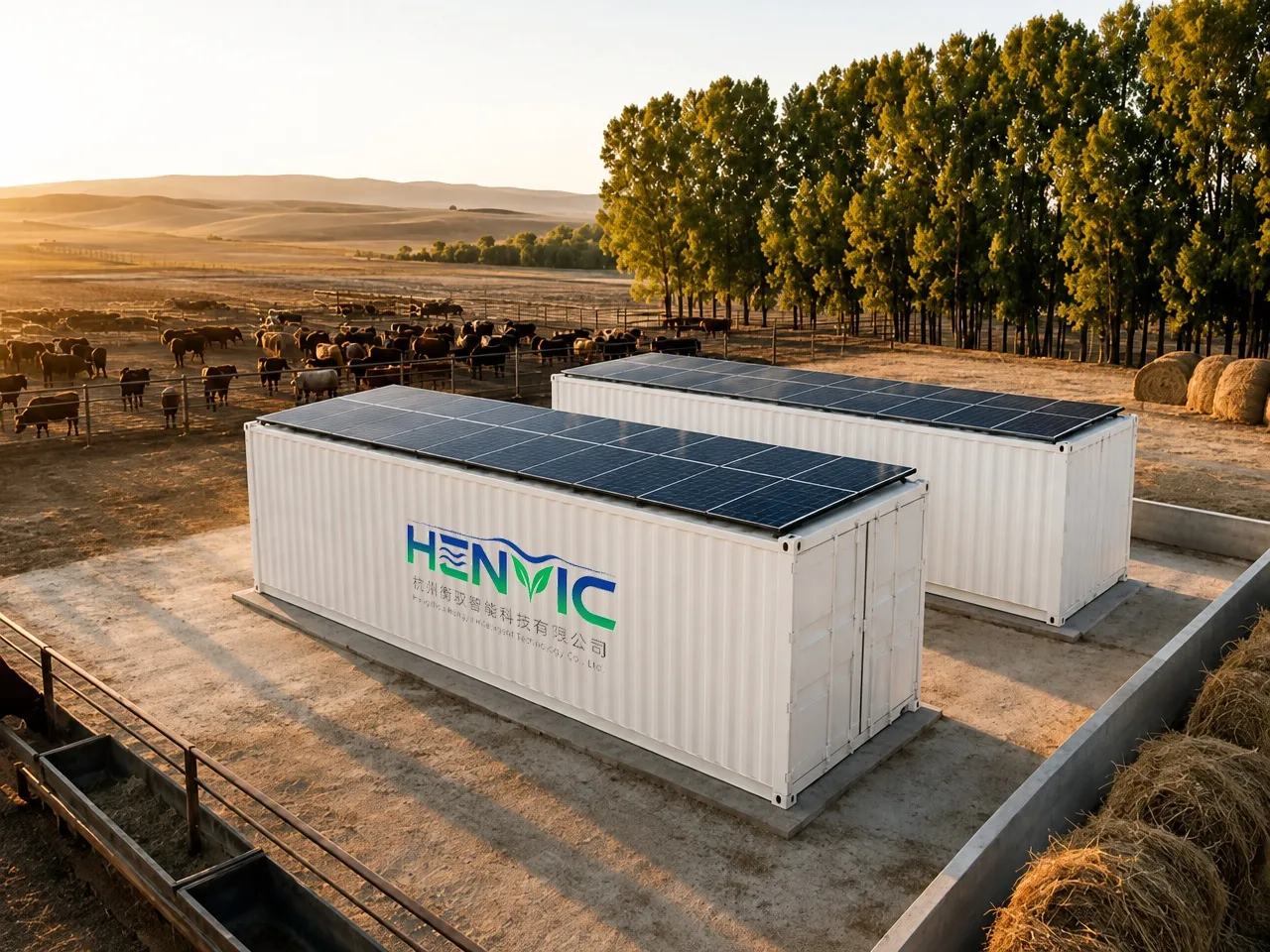
A shipping container measures roughly eighteen square meters of floor space — about enough to park two cars, and not nearly enough to feed a neighborhood. Yet walk into one that has been converted, and you find something a field of that size could never offer: spring, summer, autumn and winter, running simultaneously, on demand, regardless of what the sky is doing.
That is the claim behind the container farm, and it is worth examining not as a slogan but as an engineering proposition. The question is not whether a box can grow lettuce. It is what a box genuinely changes about how a city feeds itself.
What Eighteen Square Meters Actually Contains
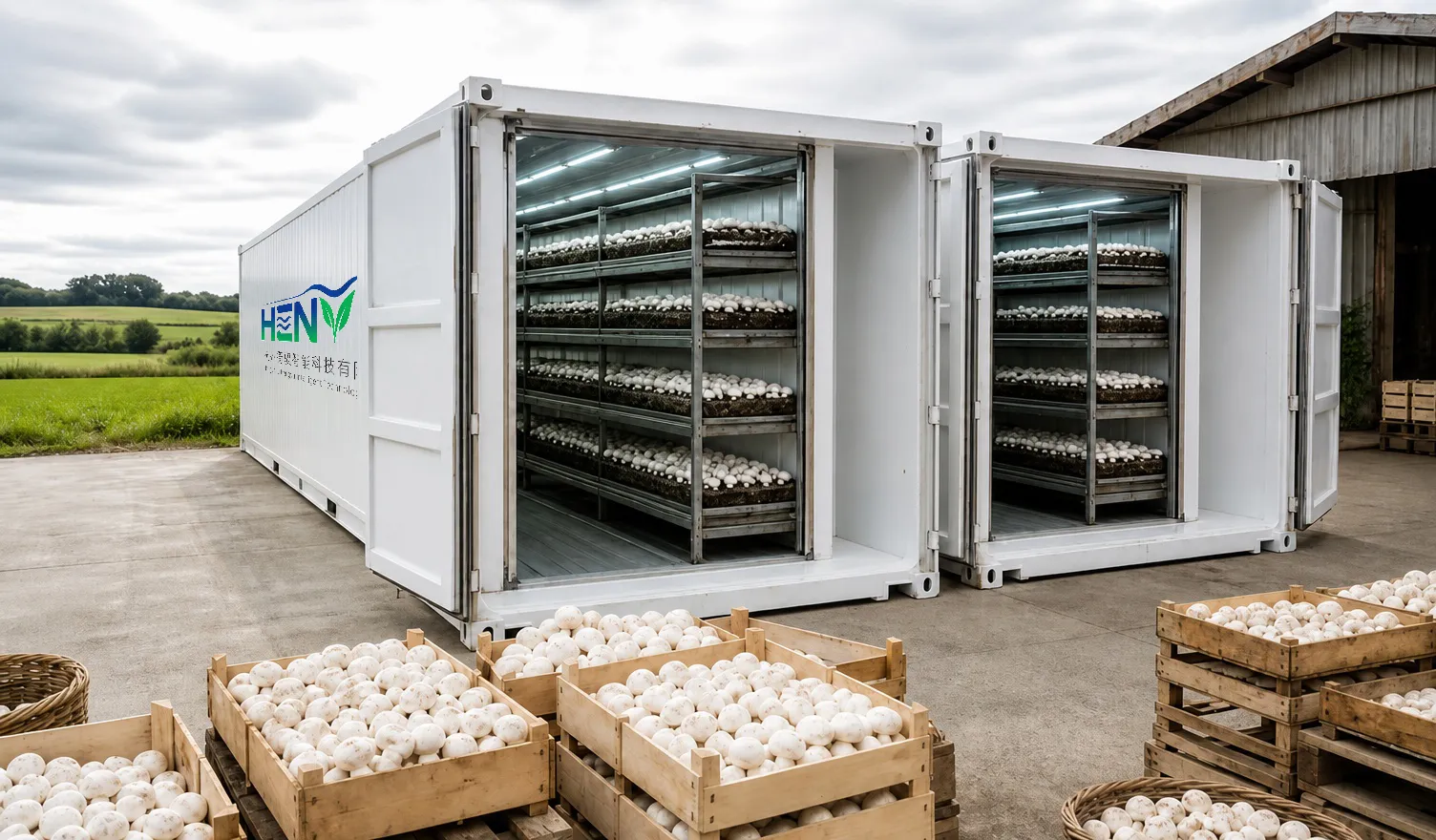
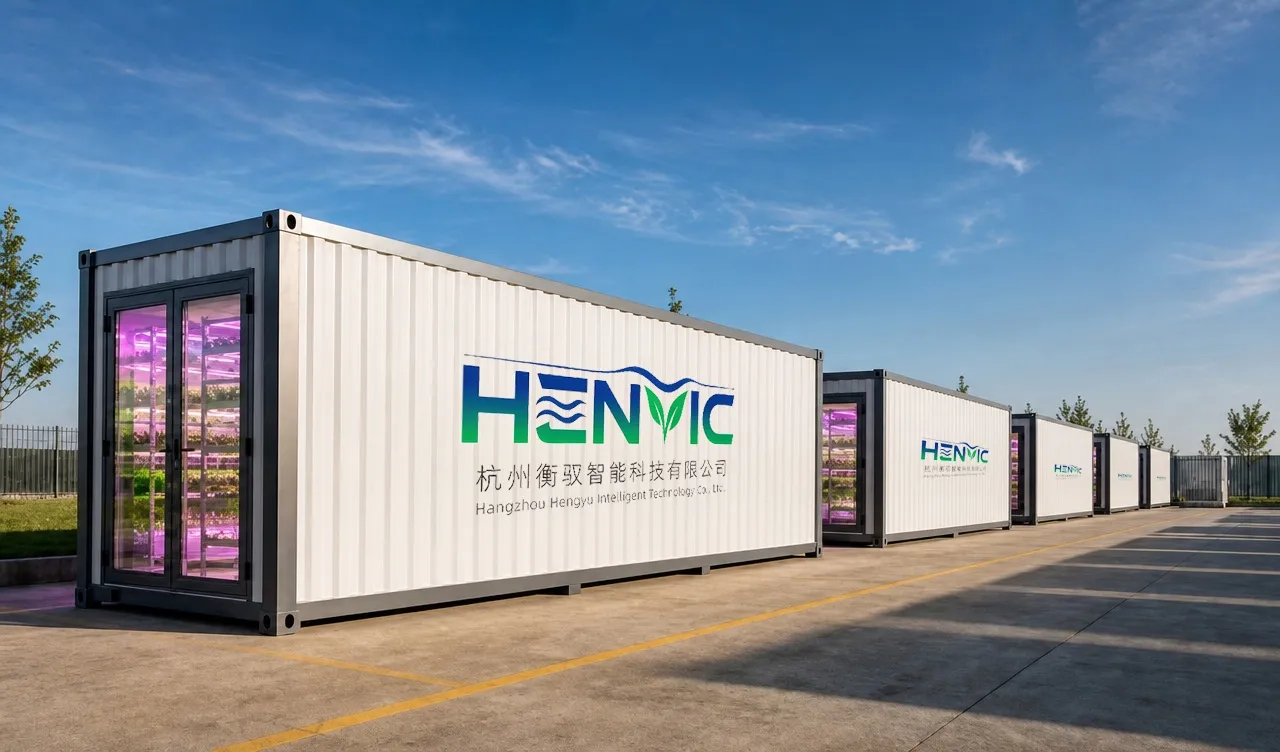
The container's trick is not area. It is volume. Growing racks stack the floor into five or six tiers, so eighteen square meters of footprint becomes a much larger growing surface. Roots sit in recirculating nutrient solution instead of soil. LED arrays tuned to specific wavelengths replace sunlight. Air conditioning, ventilation and sensors replace weather, holding temperature, humidity, carbon dioxide and light cycles inside narrow bands the whole year round.
The result is a cultivated environment that behaves like a laboratory but sells like a farm stand: clean, stable, predictable, and located wherever the customers are — inside a city rather than at the end of a long, refrigerated supply chain.
The Evidence From the Field
The most concrete public data on how these systems actually perform comes from China. In December 2024, the 2024 Bright Food–Duoduo Vertical Farming Challenge closed on Chongming Island in Shanghai. Sixteen teams entered the fourth "Duoduo Agri-Tech Competition"; six reached the final. Over more than 160 days they converted shipping containers into working farms, and reported results in the units that matter.
The champion, the Cyber Farmer team from China Agricultural University, reached a cultivation-area productivity of 0.33 kilograms of lettuce per square meter per day, while holding electricity use to 12.25 kilowatt-hours per kilogram of lettuce — a figure the judges called industry-leading. Team leader Yang Hao said the effort centered on energy, with multi-source efficiency measures such as cold-source integration and condensate recovery. Compared with the previous edition, the team more than doubled cultivation area and raised output nearly sixfold while cutting the share of energy consumed by air conditioning by nearly 70 percentage points.
The Shanghai Academy of Agricultural Sciences team pushed the same box in a different direction. Team leader Miao Chen described a hanging, movable cultivation rack that improved the container's use of space, combined with extensive light trials to find a low-energy recipe suited to lettuce. In roughly fifty days, the team harvested 1,680 heads weighing 299.55 kilograms from about forty-two cubic meters, with more than ninety percent meeting Grade A commercial standards — the highest yield in the competition.
Industry teams matched them. Shandong's Leaf Heroes installed environmental linear control plus ventilation so that a sealed box could still have a sunset and a breeze; it harvested heads averaging above 300 grams and grew a 460-gram outlier. Green Leaf Vanguard, the only finalist to remove the operator cabin, set the competition's ceiling for space: on the same footprint, its cultivation area was 2.8 times that of field planting.
Why Space Is the Real Variable
Those numbers matter because they reframe the container as a land-use technology rather than a novelty. In a dense city, the scarce resource is not capital or labor but footprint. A system that multiplies effective growing area by two or three times, while producing year-round and immune to monsoon or frost, changes the arithmetic of where food can be produced.
It also changes the logistics. Greens are among the most perishable and most transport-intensive products in the food system. Growing them indoors, in the neighborhood where they are eaten, shortens the chain from days to hours and removes most of the waste that occurs in transit. That is a genuine advantage — and the one most convincingly demonstrated by the container format.
Water offers a second, quieter argument. Hydroponic systems recirculate nutrient solution rather than irrigating soil, and closed-loop designs can cut water consumption dramatically relative to conventional field cultivation. Peer-reviewed reviews of hydroponics versus conventional agriculture generally support substantial reductions, though the exact savings depend heavily on system design and how the energy supply is counted — a caveat worth stating rather than glossing over.
The Cost That Does Not Move
What the container cannot change is the energy bill. A sealed box has no sun, no wind and no ambient humidity; every photon and every degree must be manufactured. Electricity is the dominant operating cost, which is precisely why the competition's most valuable result was not the largest head of lettuce but the lowest figure per kilogram.
This is also where the honest limits lie. Container farms today compete comfortably on freshness, cleanliness, consistency and proximity. They do not yet compete on price for staple crops. He Dongxian, a professor at China Agricultural University and a competition judge, put it plainly: several teams have reached internationally leading levels on yield and energy consumption and possess the capability for industrialization, and with stable technology the model can reach profitability at scale. The bottleneck, in other words, has shifted from agronomy to economics.
The sector is already testing that boundary in the market. Leaf Heroes has deployed plant-factory models in Japan, South Korea, Aruba and Thailand. The Moquan team is trialing chives with a local Shanghai restaurant, working with Middle Eastern partners on salad greens such as basil and arugula, and testing strawberries in Thailand. During the finals, potential partners came to watch and to look for container plant-factory partnerships. Moquan team leader Qin Chuhan offered a measured summary: vertical farming has been in China for about two decades, efficiency keeps improving, industrialization still faces real challenges — and the direction remains, by broad agreement, the right one.
A Season Without Weather
Eighteen square meters will never replace a farm. That was never the point. The container's contribution is narrower and more specific: it makes a certain kind of growing possible in places where land is scarce, climate is hostile, and supply chains are long — and it makes that growing measurable, repeatable and, increasingly, investable.
The four seasons inside the box are not a metaphor. They are a set of parameters someone has to pay for, one kilowatt-hour at a time. Whether urban agriculture is genuinely rebuilt by the container will be settled not by how much it can grow, but by whether cities decide the price is worth paying.